
Basement Water Damage & Water Removal in Marietta, GA
A flooded basement can turn from a puddle into a real problem in a short time, especially when heavy rain, a failed sump pump, seepage, or a leaking pipe keeps adding water. Our basement water damage and basement water removal in Marietta, GA covers the whole job, from pumping out the water to drying and cleaning the space. If your basement is taking on water, call now for emergency basement water removal in Marietta, Georgia, and tell us how deep it is.
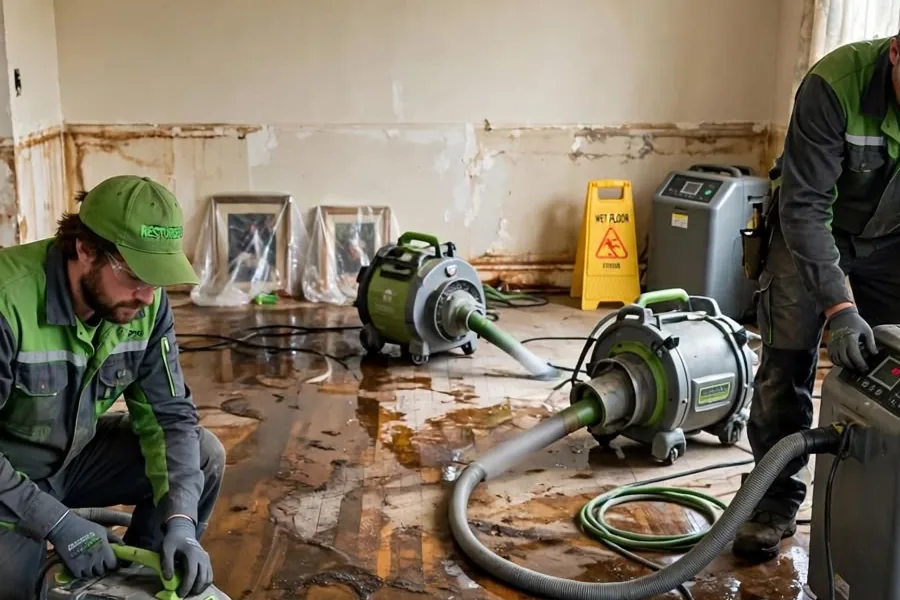
Flooded Basement: What to Do Right Now
What to do when your basement floods comes down to three things: stay safe, find out whether water is still coming in, and call before it reaches finished areas. When water is still rising, the first steps matter most.
Stay Out If Water Is Near Outlets, the Furnace, or the Panel
Is it safe to go into a flooded basement? Not if the water is near outlets, the furnace, the water heater, or the circuit breaker panel. Basement water can hide electrical hazards, and stairs and floors are slippery. If you cannot reach the panel without stepping into water, stay upstairs and call for help instead.
Sump Pump Failure and Power Outages
If your sump pump stopped working and your basement flooded, the cause is often a power outage, a stuck pump, a battery backup that has run down, or a pit that cannot keep up with heavy rain. Once the pump stops, water rises in the sump pit and spills onto the floor. Sump pump failure cleanup in Marietta starts with removing that water, while repairing or replacing the pump is separate work.
Call Before Water Reaches Finished Areas
Water spreads across a concrete floor and soaks into carpet, drywall, and stored belongings along the way. Call early, and describe how much water there is and where it is spreading. If the water has also reached the main floor, you are dealing with flood and storm damage cleanup and not only a basement problem.
Common Causes of Basement Water Damage
Basement water damage usually comes from one of four sources, and knowing which one helps decide what needs to happen next.
Why Your Basement Floods After Heavy Rain
Why does my basement flood when it rains? Heavy rain soaks the ground around the house, and that groundwater presses against foundation walls and floors. Water finds its way in through window wells, floor drains, and the joint where the wall meets the floor. Water in a basement after heavy rain often calls for groundwater in basement cleanup, even when the rest of the house looks fine.
Sump Pump Failure
A sump pump moves water out of the sump pit, and when it fails, that water has nowhere to go. A power outage during a storm is the classic example, because the pump stops when it is needed most. Sump pump overflow cleanup deals with the water that results, not with the pump itself.
Seepage Through Walls and Floors
Seepage is slow water coming through foundation walls, cracks, or the floor slab, often after days of wet weather. It can look like damp patches, a wet line along the base of a wall, or a musty smell. Basement seepage cleanup removes the water and dries the space, and it does not stop the seepage, which is a waterproofing job.
Burst Pipes, Water Heaters, and Appliance Leaks
Not every wet basement starts outdoors. A burst pipe, a leaking water heater, or an appliance leak such as a failed washing machine hose can put a lot of water on the floor, and a basement is where that water often ends up. These leaks start with clean water, but it can pick up dirt as it spreads.
Is Your Basement Water Clean or Contaminated?
Is flooded basement water contaminated? It depends on where it came from. Supply-line water starts out clean, while water from a washer or dishwasher is gray. Sewage is black water, and rainwater or groundwater that comes in from outside can carry contaminants too. If you are not sure what the water is, stay out, keep children and pets away, and do not clean it yourself. If the water came up through a floor drain or toilet, it may be a sewer backup, which calls for sewage backup cleanup and is handled differently from ordinary water removal.
Basement Water Removal and Cleanup in Marietta
Flooded basement cleanup in Marietta follows a set order: get the water out, dry the structure, then clean and sanitize.
Basement Water Removal
How to get water out of a flooded basement is simple in principle: start at the lowest point and pump the standing water out, because it will not drain by itself. Basement water removal uses the same water extraction and removal process as any other room, with the lowest area first. Flooded basement water removal also takes water out of carpet, padding, and low spots where it pools. Basement water removal after heavy rain can take more than one pass, because water may keep coming in until the ground dries out.
Drying the Basement
Basement drying after flooding matters because concrete, framing, and drywall hold moisture long after the water is gone, and basements have little airflow. Moisture that stays trapped can lead to a musty odor, damaged drywall, and warped flooring, and it raises the chance of mold growth. Checking moisture levels shows what is still wet, and structural drying and dehumidification handles the rest.
Cleaning and Sanitizing
How to clean up a flooded basement starts with removing the water and the muck it leaves behind, then cleaning hard surfaces and sanitizing what the water touched. Anything that sat in contaminated water needs more care, and some porous materials may have to be replaced. Cleaning before the water is out and the area is dry can trap moisture, so the order matters. Basement flooding cleanup is finished only when the space is both clean and dry.
Finished vs Unfinished Basements: What Gets Damaged
Finished basement water damage reaches more than the floor. Wet basement carpet and padding hold water, drywall draws it upward, and insulation, cabinets, and laminate or vinyl flooring can swell or loosen. Basement drywall water damage often continues inside the wall after the surface looks dry. Unfinished basement flooding is simpler in some ways, since concrete floors and bare foundation walls dry more easily, but the stairwell, the floor drain area, and stored belongings still take the hit. Wherever the water went, finding everything it reached is part of the job.
Cleanup vs Waterproofing: What We Do and Do Not Do
We remove the water, dry the basement, and clean and sanitize what the water touched. We do not fix the reason the water got in, such as sealing cracks, improving drainage, or replacing a sump pump, so you will need a separate contractor for that. Cleanup dries out a flooded basement, but it does not stop the next flood on its own. Knowing the difference helps you plan: cleanup first, then a separate fix for the cause.
What Affects Basement Cleanup Cost and Time
Basement jobs vary a lot. What drives the work is how deep the water is, how large the basement is, whether it is finished or unfinished, what type of water it is, and how many days it has sat. Deep water in a large finished basement takes more work than a thin layer on bare concrete, and contaminated water adds extra steps. Water that has sat in a basement for days usually reaches more materials than water caught the same day. No prices appear on this page, because the basement has to be seen before the work can be scoped.
Basement Water Damage in Marietta, GA
Whether your home is in zip code 30060 or 30067, or elsewhere in Cobb County, basement water damage cleanup in Marietta, GA is available. If you have water in your basement in Marietta, the steps are the same whether it is a thin layer on the floor or several inches deep. Not sure your street is covered? Just ask when you call.
585 Lawrence St NEMarietta, GA 30060
Call for Basement Water Help in Marietta
Call for Basement Water Help
For emergency basement water help, call now. Describe the water, and we will lay out the next step.
What to Tell Us About Your Basement
Let us know if the sump pump is running, if the power is on, how deep the water is, whether the basement is finished, and if the source of the water has been shut off. Photos of the water and the damage help, as long as you can take them from a safe spot upstairs or at the top of the stairs.