
Water Extraction & Removal in Marietta, GA
Standing water does more damage the longer it stays, because it keeps soaking into carpet, padding, floors, and walls, and from there into the subfloor and the inside of the wall. Our water extraction in Marietta, GA removes that water after a burst pipe, an overflowing appliance, a water heater leak, an overflowing tub or sink, or heavy rain. For emergency water removal in Marietta, Georgia, call now and let us know where the water is.
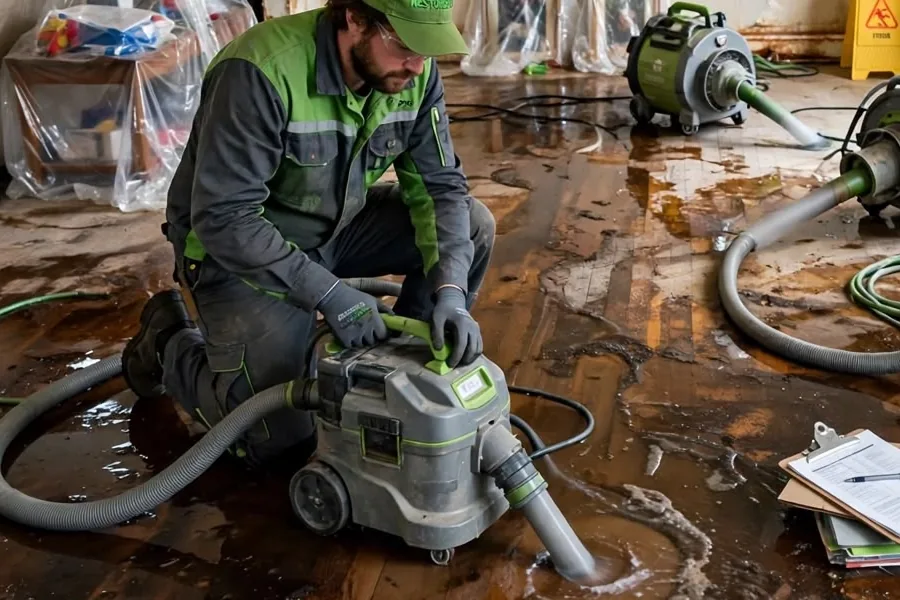
Standing Water in Your House: What to Do Right Now
When you are not sure what to do about standing water in your house, put safety first, shut off the source where possible, and call before the water spreads. In an emergency like this, a few early steps limit how much of your home gets wet.
Stay Safe Around Standing Water
Water and electricity are a dangerous mix, and standing water can hide electrical hazards. If water is near outlets, cords, or appliances, stay out of the room. Turn off power at the breaker only if you can reach the panel without stepping in water, and if you cannot, leave it alone and call for help. Wet floors are slippery. Do not use a household vacuum to remove standing water.
Stop the Water Source If You Can
Shut off the water at the fixture or at the main valve. This is the first step after a burst pipe, a failed supply line, or a leaking water heater. Water that keeps coming in makes everything else harder, so stopping the source comes before cleanup.
Call Before the Water Soaks Deeper
Water does not stay on the surface. It moves into carpet, padding, floors, and walls, and the longer it sits, the further it spreads. If heavy rain flooded the whole house, the job goes beyond one room and becomes flood and storm damage cleanup. Call and we will walk you through the next step.
How Water Extraction Works
If you are asking how to remove standing water from a house, the answer is that it has to be pumped out and extracted, and then the structure has to be dried. Here is how each part works.
Standing Water Removal
Standing water removal starts with getting the bulk of the water out so it stops spreading, with the water pumped out of the affected rooms. Removing the water early can reduce the amount of moisture and odor that builds up inside the home. Standing water in a basement follows the same steps, and when it comes from below ground the job is closer to basement water damage than a surface leak.
Wet Carpet and Padding Extraction
Wet carpet water extraction pulls the water out of the carpet fibers and the padding underneath, and wet carpet and padding extraction matters because the padding holds far more water than the surface suggests. If you are wondering how to get water out of carpet, towels and fans alone remove only a small part of it. Whether wet carpet can be saved after water damage depends on the water type and on how many hours or days the carpet stayed wet, so nobody can promise an outcome before seeing it. Padding is more likely than carpet to need replacement.
Water Removal From Floors
Water removal from floors covers hardwood, laminate, and tile. Water that sits on or under a hard floor can seep into seams and the subfloor, so the sooner it comes out, the less likely the flooring is to swell, cup, or loosen.
Water in Walls
Water in walls collects in drywall and wall cavities, where it is hard to see. It often starts at the baseboard and wicks upward, so a wall can look fine while the inside stays wet. Reaching it can mean opening up the lower part of the wall, and finding it early is part of the work.
Moisture Check and Handoff to Drying
Extraction removes the water that can be reached, and a moisture check shows what is still wet. Whatever remains inside walls, floors, and subfloors needs structural drying and dehumidification to finish the job.
Clean, Gray, and Black Water: Why the Type Matters
Not all water is the same, and the type changes the job. Category 1 is clean water, such as a broken supply line, and it is the least hazardous. Category 2 is gray water, such as overflow from a washing machine or dishwasher, which can carry contaminants. Category 3 is black water, which is heavily contaminated and includes sewage and certain types of flooding from outside. Avoid direct contact with contaminated water and leave cleanup to professionals. Water that starts clean can become contaminated the longer it sits, which is another reason to act early. The category affects what protective steps are needed, what can be cleaned, and which materials have to be removed. Black water needs separate sewage cleanup, not ordinary extraction.
What Affects the Cost and Time of Water Extraction
Every job is different. The main factors are the depth and area of the water, the type of water, how easy the area is to reach, and how long the water has been there. Deep water over a large area takes longer than a shallow spill, and contaminated water takes more care. Tight spaces, finished floors, and cluttered rooms can slow extraction, while open areas go more smoothly. The sooner the water is assessed, the clearer it is how much there is and where it went. Prices are not listed here because the water has to be assessed first.
Water Extraction in Marietta, GA
Our residential water extraction and water removal in Marietta, GA reaches homes in Cobb County, including zip codes 30067 and 30068. Whether the water is in one room or has spread through a home, the same steps apply. Not sure about your address? Mention your zip code on the phone and we will confirm whether it is covered.
Call for Water Removal in Marietta
Call Now for Water Removal
If you need emergency water removal, call now. Tell us what you are seeing, and we will go through the next steps with you.
What to Tell Us About the Water
Give us the location of the water, tell us whether the source is off, how long the water has been standing, and whether you think sewage is involved. A few photos of the damage help, if taking them is safe.