
Structural Drying & Dehumidification in Marietta, GA
Removing the water is only the first step after flooding or a leak, because moisture stays trapped inside walls, floors, and insulation. Structural drying in Marietta, GA takes that moisture out of the materials before it causes lasting damage, and quick drying matters because each extra day of dampness can raise the risk of swelling, warping, and mold. If your Marietta, Georgia home is still damp, call and tell us what got wet.
Why Moisture Stays After the Water Is Gone
Water does not only sit on the surface. It soaks into drywall, wall cavities, insulation, baseboards, subfloors, and cabinets, and it keeps evaporating slowly long after the puddles are gone. That is true whether the water came from a leak or from a flooded basement. Damp materials also release moisture into the air, and humid air slows further drying unless that moisture is removed. That is how a room can seem dry to the eye while the framing and studs are still holding water.
Signs Moisture Is Still Inside
Watch for a musty smell, walls that feel damp or cool to the touch, paint that bubbles or peels, condensation on windows or walls, and floors that start to cup or buckle. Any of these means moisture is still present, even if nothing looks wet.
How Structural Drying and Dehumidification Work
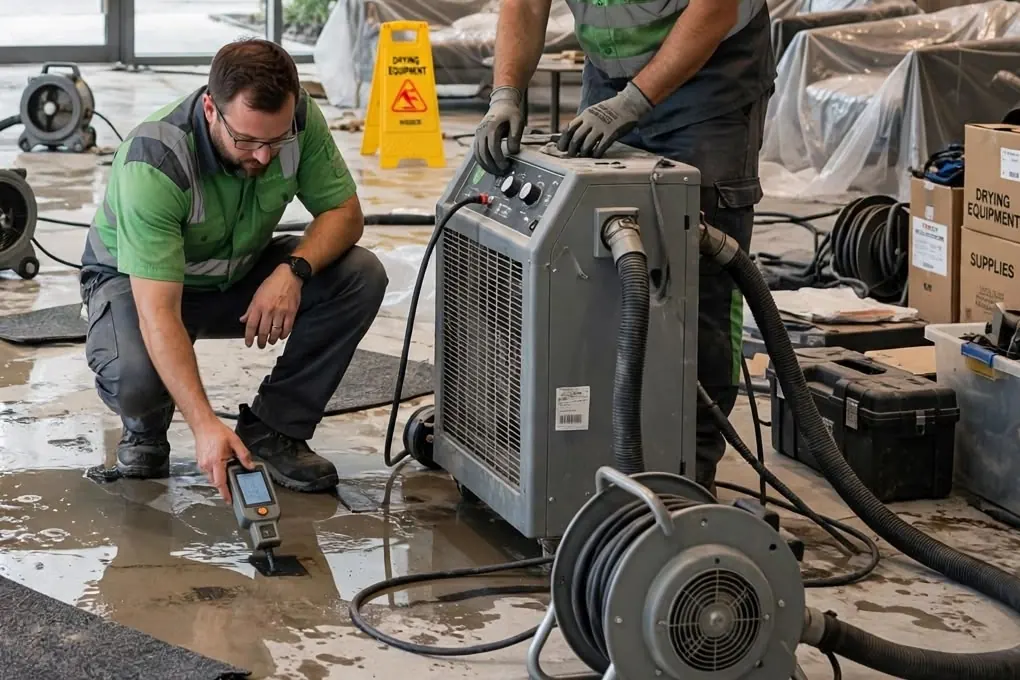
Here is how to dry a house after water damage: air movement, dehumidification, and monitoring have to work together until the materials are dry. Drying works by evaporation, so the goal is to keep moisture moving out of the materials and out of the air.
Air Movement
Air movers push air across wet surfaces and into wall and floor cavities, which speeds evaporation. Without moving air, moisture stays close to the material and drying slows down. Airflow only works if the moisture it picks up has somewhere to go, which is why air movers and dehumidifiers are used together.
Dehumidification After Water Damage
Dehumidification after water damage means pulling moisture out of the air so it does not settle back into walls and floors, and lowering relative humidity to a level where materials can keep drying. If you are asking whether you need a dehumidifier after water damage, the usual answer is yes once the damage is more than a small spill, because fans and open windows alone often cannot remove that much moisture, especially in humid weather.
Moisture Readings and Monitoring
Moisture readings show how wet walls, floors, and subfloors are, and repeating them shows whether drying is working. Moisture mapping, which records where the moisture is room by room, keeps the work focused on the areas that need it. Temperature, relative humidity, and the grains of moisture per pound of air are tracked as well, because they show whether the air is dry enough to keep pulling moisture out of the materials.
How We Know the Structure Is Dry
So how do you know when a house is dry after water damage? A structure is dry when the readings in the affected materials match the readings in similar unaffected materials in the same building. Drying records are kept so progress can be seen from the first reading to the last, which is far more reliable than judging by how a wall or floor feels.
What We Dry
Wall and floor drying after water damage covers every material the water touched, not only what you can see.
Walls and Drywall
Drywall soaks up water and holds it, and wet insulation inside the wall can stay damp for a long time. Wet insulation drying matters because insulation holds moisture against the framing. For anyone asking how to dry wet drywall, the cavity behind it has to dry as well as the surface, so drying wet drywall means moving air and lowering humidity until the cavity reads dry. Drywall that has swollen, softened, or crumbled usually has to be replaced instead.
Floors and Subfloors
Subfloor drying matters because water that soaks through flooring gets trapped between the finished floor and the subfloor, where it cannot evaporate on its own. Tile, laminate, and carpet each hide moisture in a different way, and baseboards and the bottoms of cabinets are often wet too. Drying only the floor surface leaves the damage in place underneath.
Hardwood Floors
Hardwood absorbs moisture and responds by changing shape. Cupping, where the edges rise, crowning, where the center rises, and buckling, where boards lift off the subfloor, are all signs of trapped moisture. How to dry hardwood floors after water damage depends on patience: hardwood floor water damage drying has to be gradual and monitored, because drying too hard or too soon can cause warping of its own. Hardwood cupping after water damage sometimes settles as the floor dries, and sometimes it does not.
Crawl Spaces
Crawl space drying in Marietta covers the materials that got wet under the house, including floor framing, the underside of the subfloor, and insulation. Water can soak these materials where nobody sees it, so they are easy to overlook. The goal is to dry what the water reached, which protects the floors above.
Wet Ceilings and Attics After Roof Leaks
Wet ceiling and attic drying after a roof leak means drying the ceiling drywall, the insulation above it, and the attic framing that got wet. We dry the damage and do not repair roofs, so the leak itself needs a roofer.
How Long Does Drying Take?
If you are asking how long it takes to dry after water damage, drying can take several days or longer, and it is rarely finished in a single day. The main factors are the size of the area, how wet the materials are, the type of material, the humidity level, airflow, and the season. Dense materials like hardwood dry more slowly than drywall, and humid Georgia summers can slow everything down because the air already holds a lot of moisture. After a flood, more of the structure is usually wet, which is why flood and storm damage jobs tend to take longer than a single leak. An exact number of days cannot be promised before the job has been assessed.
What Happens After Drying
Once the readings show the materials are dry, the drying equipment comes out and you can see what is left to repair. If drying is delayed or incomplete, mold can start to grow in damp materials, which is one more reason to dry thoroughly the first time. Some materials cannot be saved, such as crumbled drywall, swollen laminate, or insulation that stayed wet. Repairs and rebuilding are separate from drying, so you will need a contractor for them. If standing water is still present, it has to be removed first through water extraction and removal, because drying cannot do its job while water is still sitting there.
Structural Drying in Marietta, GA
Structural drying and dehumidification in Marietta, GA is available to homes in zip codes 30008 and 30090, as well as the rest of Cobb County. Water damage drying in Marietta follows the same steps whether the water came from a leak, a flood, or a roof. Ask us when you call if you are unsure whether we cover your street.
Call to Schedule Drying After Flooding in Marietta
Call to Schedule Drying
If your home is still damp after flooding or a leak, call to schedule drying. Tell us what is wet, and we will explain how drying and dehumidification would work for your home.
What to Tell Us About the Wet Areas
Tell us what got wet, when the water happened, whether the standing water has already been removed, and how the walls and floors feel now. If it is easy to do, take photos of the wet areas for reference.