
Flood & Storm Damage Cleanup in Marietta, GA
Stay out of floodwater until you know it is safe, because it can hide electrical hazards and carry contamination. Flood damage cleanup in Marietta, GA starts by taking out the floodwater and mud, then dries the structure and cleans what the water reached after heavy rain or other storm damage. If you need emergency flood cleanup in Marietta, Georgia, call and tell us how high the water has risen.
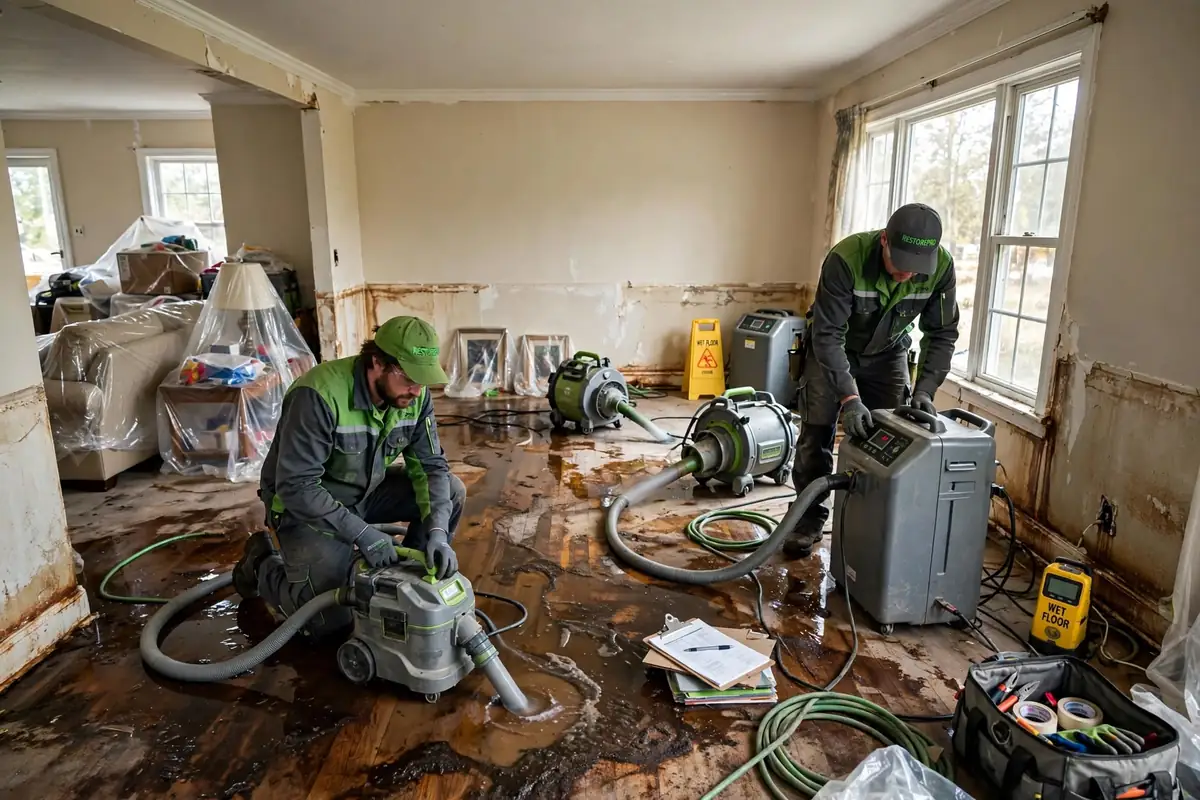
Flooded Home: What to Do Right Now
Here is what to do after your house floods: protect yourself first, record what happened, and call before any cleanup begins. The same steps apply when you are working out what to do after a storm floods your house.
Stay Out of Floodwater
Floodwater can hide live electrical hazards, especially around outlets, appliances, and extension cords, and the water itself can contain bacteria, sewage, and chemicals. Wet floors and mud are also slippery. Stay out until the power is confirmed safe, avoid skin contact with the water, and do not try to wade in to rescue belongings.
Document the Damage Before Cleanup Begins
Photograph the flooding and the damage from a safe spot before anything is moved, and note the water line on walls and furniture. Those records help later with an insurance claim, and they show how high the water got. Video works as well as photos, and damaged items are worth keeping until the claim is sorted out, unless they are unsafe to keep.
Call for Floodwater Removal
As soon as it is safe, call for emergency help with floodwater removal. Water that stays in a house soaks deeper into drywall, flooring, and subfloors over time, and ground-floor flooding can spread across a whole level. Let us know whether the power is on, because it affects what is safe to do.
Why Floodwater Is Different From Other Water Damage
Is floodwater contaminated? In most cases it should be treated that way. Floodwater is often contaminated because it picks up mud, silt, debris, fuel, chemicals, and sometimes sewage on its way in, and some kinds of outside flooding are classed as Category 3 (black water), the most heavily contaminated category. That is why a flood is a different job from a leak. Clean-water methods are not enough, and porous materials that were soaked may not be safe to keep. Keep your skin out of contaminated water, and leave the cleanup to professionals. If drains backed up or sewage mixed into the flooding, the job also includes sewage backup cleanup. Can you stay in a house after it floods? It depends on how far the water reached. If the electrical system may be affected, or contaminated water covered living areas, it is safer to stay somewhere else until the damage has been dealt with.
Whole-House Flood Cleanup
Flood damage restoration starts with getting the water out and ends with a dry, clean structure. Flooded house cleanup in Marietta works through four stages, and ground-floor flooding often means every room on the level is involved.
Floodwater Extraction
Floodwater extraction in Marietta comes first, because water that stays in contact with materials soaks deeper over time. Flood water removal in Marietta covers standing water on floors and the water soaked into flooded carpet and padding, and it follows the same steps as water extraction and removal.
Removing Mud, Silt, and Debris
Flooding leaves a layer of mud and silt on floors, walls, and belongings, along with debris carried in by the water. Mud and silt cleanup comes before drying and sanitizing, because a layer of silt that dries in place is harder to clean and can hold contamination against surfaces.
Drying and Dehumidification After a Flood
A flooded house holds a lot of moisture, in walls, subfloors, and the air itself. How long does it take to dry a house after a flood? Plan on days rather than hours, and sometimes longer, depending on how much of the structure got wet and the humidity at the time, and an exact timeline cannot be promised before an assessment. Structural drying and dehumidification is what gets the materials dry.
Cleaning and Sanitizing After Contaminated Water
How to clean up after a flood comes down to order: water out first, then mud, then drying, then cleaning and sanitizing. Contaminated floodwater cleanup means cleaning hard surfaces first and sanitizing them afterward, and anything the water carried in is treated as contaminated. A final moisture check confirms that nothing is still wet.
What Usually Has to Be Removed After a Flood
Porous Materials That Usually Go
Soaked carpet, padding, drywall, and insulation from a flood usually have to come out, because they absorb contamination and cannot be fully cleaned, and drying them does not make them safe to keep. Flood damage to drywall and flooring often goes deeper than it looks, and baseboards and the lower part of cabinets are often affected too.
Hard Surfaces That Often Survive a Flood
Tile, sealed concrete, and other hard, non-porous surfaces can often be scrubbed down and sanitized rather than replaced. Subfloors, hardwood, and cabinets are the gray area, and each has to be judged by how long it sat in the water and how far the water soaked in.
Storm and Heavy-Rain Water Damage in Marietta
Storm water damage cleanup in Marietta covers water that came in from the storm itself: rain driven through doors, windows, and walls, runoff pushing in at ground level, or water that followed a roof leak down into the house. Wind-driven rain water damage often shows up at window frames, door thresholds, and exterior walls, and heavy rain flooding cleanup applies once that water collects on the floor or soaks into flooring and drywall. Storm damage water removal, rainwater in house cleanup, and flash flood cleanup all follow the same order: remove the water, dry the structure, then clean. We deal with the water inside the home, and roof repair is a separate job for a roofer. If the water collected in a basement, basement water damage covers that specific situation.
Flooding in Marietta: Causes and Local Context
Flooding in Marietta usually comes from heavy rain that leaves the ground saturated, from flash flooding that overwhelms creeks, or from creek overflow onto nearby streets and yards, and water intrusion into a home can follow within a short time. Sope Creek near Marietta has an official National Weather Service flood gauge (opens in a new tab), and the creek is considered in flood at 12 feet on that gauge. Flash flood warnings (opens in a new tab) have covered creeks across Cobb County, including Sope Creek and Noonday Creek, as they did with the remnants of Hurricane Sally in 2020, and the September 2009 floods were especially severe in this area. Storms can also overwhelm sewers, so sewer overflow during storms is another way contamination ends up in a flooded home.
Floods and Your Insurance
A standard homeowners policy often does not cover flood damage, and flood insurance is usually a separate policy, so check which coverage you actually have. Keep your photos, notes, and other documentation of the water line, because they help you describe the loss. Do not throw out damaged items until they have been documented, and ask your insurer what it needs to see. The insurer decides what is covered.
What Affects Flood Cleanup Cost and Time
Flood jobs are rarely small. What shapes a flood job is the depth and duration of the flooding, the area affected, how contaminated the water was, and the materials involved. A few inches of water that drained within hours is a very different job from several feet that stayed for days, and contaminated water adds steps. Water that reached walls and insulation adds drying time beyond what the visible flooding suggests. No prices appear here because flood damage cannot be scoped until someone has seen it.
Flood Damage Cleanup in Marietta, GA
Flood damage cleanup in Marietta, GA covers zip codes 30066 and 30090, with the same service across Cobb County. Whether the flooding covers one room or an entire level, the cleanup steps follow the same order. A flood does not follow zip code lines, so if you are near the edge of the area, call and ask.
Call for Flood and Storm Damage Cleanup in Marietta
Call About Flood Damage
For emergency flood cleanup, call now. Tell us what the water has done so far, and we will go over what comes first.
What to Tell Us About the Flooding
Tell us how deep the water is, which floors are affected, whether sewage may be mixed in, and whether the water has stopped rising. If it is safe, photos taken from a dry spot are useful.